
Case Study
Fabrick Group — Portfolio Fire Safety Compliance Works
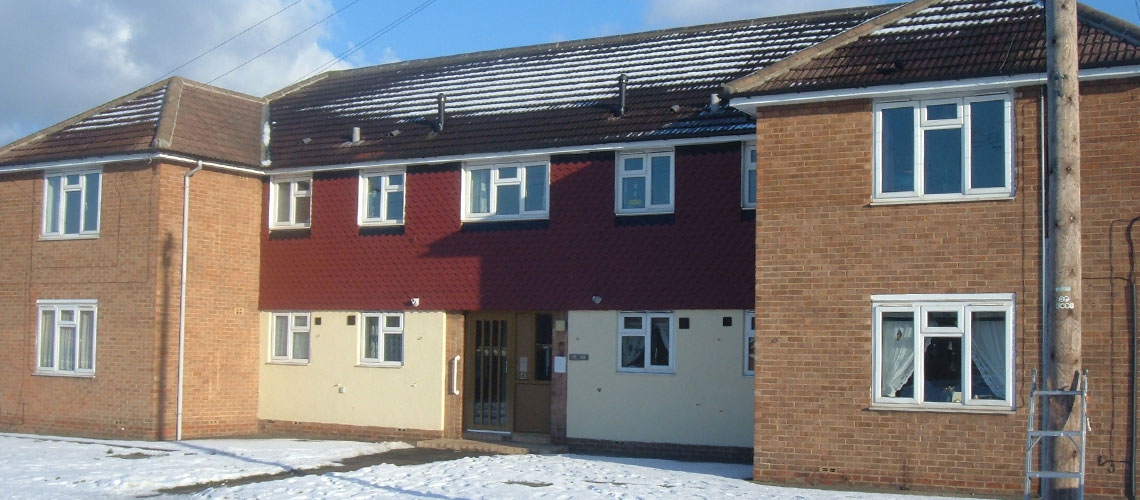
This case study records the 2010–2015 partnership programme. Interseal UK Limited entered a partnership agreement with Erimus Housing Limited/Fabrick Group in March 2010, providing surveys of existing fire barrier installations and building compartmentation/firestopping and subsequent repair or replacement in line with the survey reports. We have demonstrated our experience and expertise through our survey and reporting works and have proven our delivery capability, through planning, written methodology and completion of the required works in accordance with quoted prices and stated programme times and to the complete satisfaction, upon inspection, of both the system manufacturers and FIRAS accreditation appraisers. Service has thereafter extended to submission of extensive O & M manual information, incorporating label identification, cross referenced to register of works, plan location drawings and photographic records, thus providing complete traceability to every item of work completed within each building and facilitating effective management of all maintenance works.
In the five-year period of the partnership alliance we completed a comprehensive programme of works comprising Low, Medium and High Rise multiple occupancy schemes with values from £1k to £250k per scheme. In 2011 we also completed an intensive schedule of works with Tees Valley Housing in which we carried out survey, reporting and fire compartment works to their entire portfolio of properties that fell under the RRO requirements, comprising more than 70 schemes and ranging in value from £2k to £25k each.
With regard to works carried out in the specialised environment of high-rise residential blocks, we completed the required compliance works to Milford, Portland, Jupiter, Thorntree, Fleet, Welton and Glastonbury Houses and repeat works at Thorntree and Fleet Houses, all for Erimus Housing, to facilitate replacement of the soil stacks within the risers.
Most worthy of mention from the High Rise schemes would be Glastonbury House that required coordination of simultaneous removal of asbestos within the service risers and the additional consideration of the mostly infirm condition of the residents. Interseal were an integral part of the team led by Erimus Housing Asset Management with Environtec providing the Principal Contractor role. The multiple trade operations within the risers had to be completed over a 45-week programme with 7-day working throughout. Our fire stopping works within the risers had to be completed between Thursday and Sunday of each week and additionally, our scope of supply extended to the replacement of riser doors and associated second fix joinery work and plaster repairs, as well as subcontract responsibility for all the associated plumbing and electrical works. We coordinated utilisation of the Monday to Wednesday down period to carry out the fire stopping works to the communal areas and thereby improved the efficacy of the weekly operation by avoiding a constant stop/start scenario.
The Project was as difficult a proposition as might ever be encountered in the High Rise environment but was successfully delivered and all parties were highly commended for their part in that success.
As a result of all the above, we completed a substantial and successful learning curve of working within occupied or tenanted areas and developed a complete understanding of the sensitive nature of this environment.
We learnt that each scheme and often different areas within schemes require individual consideration. Those considerations should include:
- Communicating our presence and operations to all concerned parties with regular occupier and tenant communications.
- Sequencing and programming the work activities around clients' operational needs and tenant occupation.
- Formulation of decanting and room-out schedules to allow the client or tenant to maximise the useful potential of the building whilst works can progress.
- Consideration towards tenant domestic pets, particularly when temporary relocation may be required.
- Handling of any tenant queries or complaints in a respectful and professional manner and in full cooperation with the client's requirements under the contract agreement.
- Identification of operatives by wearing identifying clothing with Company name and logo and carrying identifying badges detailing operative name and photograph, and company and client details.
- Maintaining client and tenant confidentiality.
- Ensuring ongoing scheme security procedures are maintained.
- Controlled access and egress for staff and operatives.
- Maintaining evacuation routes and life-preserving systems.
- Ensuring that safe systems of work are developed and maintained.
- Temporary protection of smoke and fire alarm systems.
- Environmental control such as acoustic barriers and dust screens, good housekeeping and protection of existing finishes in work areas and access routes.
- Planned and managed shutdown and isolation of mechanical and electrical services, if necessary, with due awareness and maintenance of essential systems.
Liaising with tenants is always an essential aspect of operating within the social housing sector and can require great sensitivity and patience.
Our approach and contribution to tenant liaison will vary depending on the size of the scheme and whether the scheme is managed in-house or not.
For the larger managed Medium and High Rise schemes we rely on the client tenant liaison officers to organise the initial general notification to tenants as to the nature and programme of our impending works. We will however provide representation at any pre-start tenant consultation meetings that may be arranged to answer any questions or concerns with regard to our operations, prior to the works commencing.
Once we are on site we adopt a proactive approach to liaison by letter dropping each tenant with notification of proposed specific dates for entering their residence and providing company information and contact details to enable them to address any concerns they may have or to arrange alternative suitable dates if required.
We will attend periodic progress meetings with client liaison officers who will then be able to keep tenants updated on progress of the works within their building at tenant meetings and forums and when asked. We will work closely with the resident scheme manager and staff with regard to maintaining the operational activities of the building and minimising disruption to the tenants and to deal jointly and professionally with any complaints that may arise.
Interseal Toolbox Talk No. 27 covers “dealing with confrontational tenants” and is delivered to teams within the induction process prior to commencement of each scheme in order to reinforce Company Policy.
Related News
Planning a portfolio-wide compliance programme?
Discuss surveys, reporting, remediation and project records with our team.