Fire doors
Fire door repair or replacement: making an evidence-led decision
A practical guide for property managers deciding whether to repair or replace a fire door, including the evidence to request, survey questions and records to keep.
A fire door inspection can leave a property manager with a deceptively simple question: repair the door or replace it? The answer should follow the door's required performance, its condition and the evidence supporting the proposed work. Age, appearance or a missing label alone cannot settle it.
This guide is for those commissioning work in England. It explains how to ask useful questions and compare proposals; the technical decision belongs with people competent to assess the particular door and its role in the building.
Start with the finding, not the quotation
Ask for each issue to be tied to a door reference, location and photograph. “Door requires attention” is too vague to price or close out. A useful finding distinguishes between a defect that has been observed, an uncertainty requiring investigation and a recommendation based on the building's fire risk assessment.
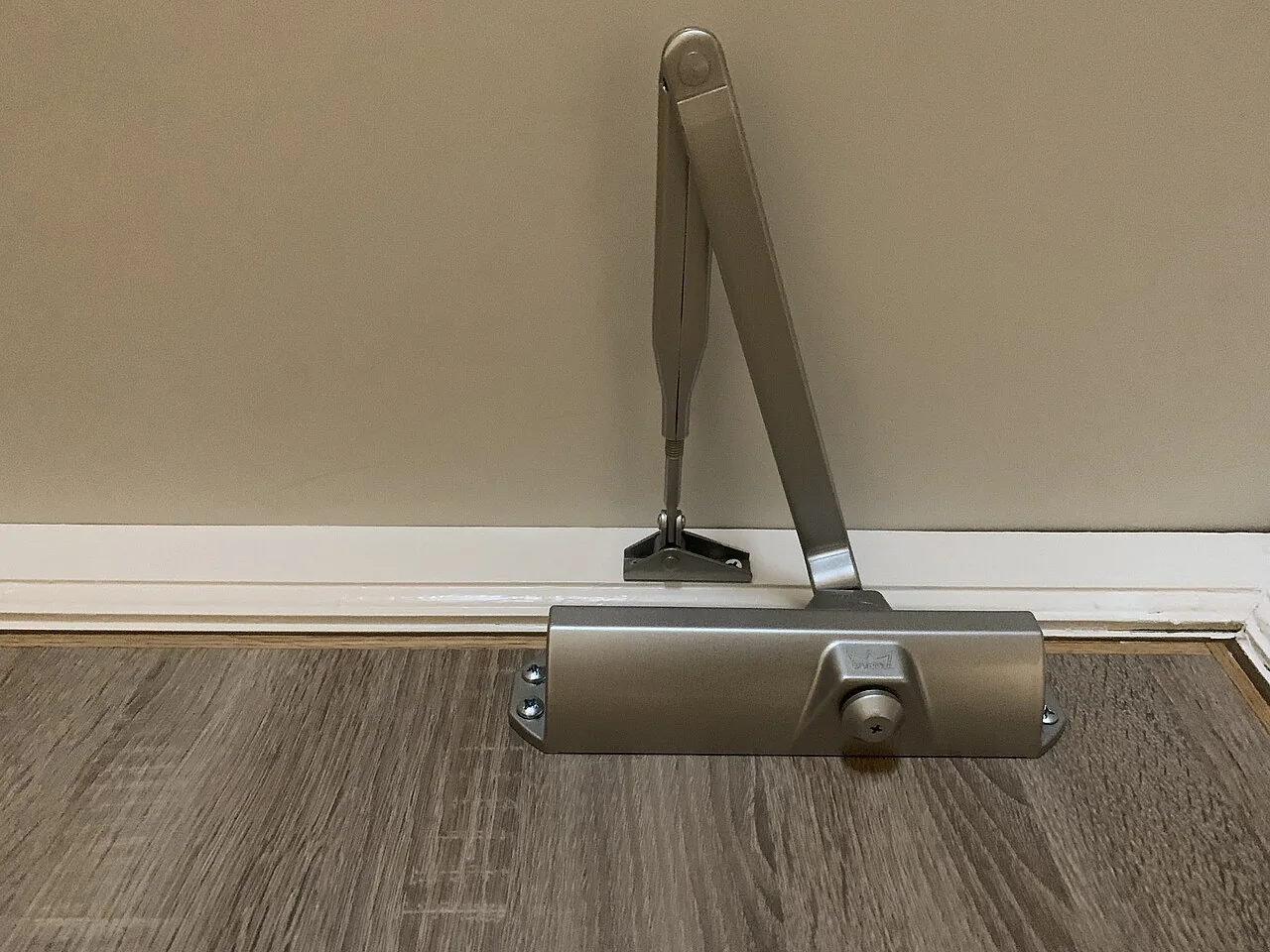
For example, a door that fails to close needs prompt attention, but the cause still needs establishing. The proposed solution could involve a compatible component, the door's fit, the frame or another underlying issue. Ordering a replacement closer without understanding the cause may leave the original problem unresolved.
Where the report is unclear, request clarification before authorising a programme. Our guide to understanding your survey report sets out how to turn findings into defined actions.
An older door does not automatically need replacing
Government guidance explains that existing doors need not be replaced solely because they fall short of current standards if they remain effective from a fire safety perspective. Assessment of their adequacy sits within the wider fire risk assessment. Missing certification is not, by itself, proof that an existing door is unsuitable. Necessary repairs or replacement should be completed by a competent contractor as soon as reasonably practicable. See the government fire door guidance.
That does not make uncertainty a reason to ignore a finding. Ask the assessor what evidence is missing, how it affects their conclusion and what investigation would resolve it. Keep that distinction visible in the action register.
What makes a repair proposal credible?
A repair proposal should explain the intended outcome and its technical basis. Depending on the issue, the contractor may need to refer to the original doorset information, manufacturer instructions, relevant assessment evidence or an applicable approved repair method.
Request answers to these questions:
- Which specific defect will the repair address?
- How has the door and its surrounding construction been identified?
- What evidence supports the proposed materials and method for this door?
- Does the scope include compatible ironmongery, glazing, seals and other affected components?
- How will the completed work be checked and recorded?
- What finding would make the proposed repair unsuitable once work begins?
The final question matters when concealed conditions are uncertain. Agree a hold point: if the assumed condition is not present, work pauses for a documented decision rather than an improvised change. A fire door survey can help establish the scope before a larger maintenance package is procured.
When replacement needs considering
Replacement may be the appropriate recommendation where the existing assembly cannot achieve the required performance through a supported repair, where its condition prevents a satisfactory repair, or where a change to the building creates different requirements. The report should explain which of these circumstances applies.
When comparing replacement quotations, establish whether the price covers the complete doorset, surrounding interfaces, access arrangements, removal, making good and handover information. A door leaf price and a fully installed doorset price are different scopes.
Ask who will confirm the required specification and any building control requirements. Include accessibility, security and day-to-day operation in the brief so that the replacement can be used properly by the people who live or work there.
Compare the whole outcome
The lowest initial price is not a complete comparison. Request separate allowances for survey work, repairs, replacement, resident appointments and unresolved items. Then consider whether the proposal addresses the cause of the defect, what disruption it creates and what evidence will remain afterwards.
Avoid demanding a repair quota or replacement percentage before the doors have been assessed. A portfolio may contain several door types and repair histories. Sampling can inform planning, but the limitations of any sample need to remain explicit.
Close the action at the door, not just on the invoice
An invoice shows that work was charged for. Your maintenance record should also show what happened to each identified door: the defect, agreed work, completion date, checks, supporting photographs and any residual issue.
Record a missed appointment as outstanding access, rather than completed work. Record a door awaiting technical review separately from one awaiting materials. These distinctions make follow-up manageable and prevent an incomplete programme appearing finished.
For a defined schedule of repairs or replacements, share the survey, door register and known access constraints with our fire door maintenance team. Those details make the proposed scope easier to assess and compare.
Sources and further reading
Checked 14 October 2026. The practical commissioning suggestions above are not a door repair specification.